
From Constraints to Expansion: How Jireh Aidoo Ltd Turned Financing into Market Confidence and Growth
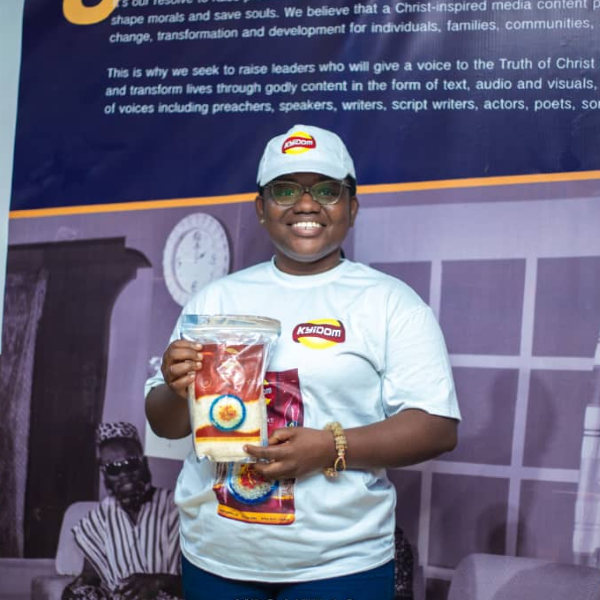
From Constraints to Expansion: How Jireh Aidoo Ltd Turned Financing into Market Confidence and Growth Meet Sarah Aidoo, a 30-year-old Accra entrepreneur and founder of Kyidom Rice. Like many early-stage agripreneurs, Sarah had a vision—but lacked the confidence, skills, and platform to bring it to life. For a long time, she stayed away from business competitions and dealrooms, unsure how to present her ideas or attract funding. A delicate balance between demand, perception, and access to working capital continues to shape Ghana’s agribusiness sector. For Sarah Aidoo, founder of Jireh Aidoo Ltd in Kasoa, that balance once felt consistently out of reach. Her rice processing business had a product that customers valued, but the systems behind it were under strain. “The challenges were really working capital and packaging,” she reflects. “Many customers liked our rice, but concerns about packaging affected purchasing decisions.” Those constraints shaped daily operations. Without sufficient capital, production could not always be aligned with demand. Orders were often difficult to fulfil in advance, and the business risked losing opportunities not because of quality, but because of timing and presentation. “We struggled to supply orders ahead of time because we simply didn’t have the financial room to produce at scale,” she explains That reality began to shift through the Post COVID-19 Skills Development and Productivity Enhancement Project (PSDPEP) intervention, which provided Jireh Aidoo Ltd with access to GHS 100,000 in low-interest microcredit. For Sarah, the financing was not just liquidity; it was leverage. “The support changed how we operate completely,” she says. “It gave us the ability to improve packaging and also finance production ahead of demand.” The changes were quickly visible in the market. Packaging, once a barrier to trust, became a signal of quality. Production capacity expanded, allowing the business to respond proactively rather than reactively. “Before, we were always catching up with demand. Now, we are preparing for it,” Sarah notes. “Today, brokers are actively reaching out for bulk supply.” The financial impact followed closely behind the operational shift. Weekly sales grew from GHS 8,000 to GHS 34,000, marking a significant transition in business scale and consistency. But for Sarah, the numbers only tell part of the story. “What matters most is stability,” she says. “We are no longer worried about whether we can meet orders when they come.” That stability has also translated into employment. The business has created two direct jobs and expanded casual employment opportunities for production activities, extending its influence beyond the enterprise itself into household livelihoods. One of the production staff members describes the change simply: “There is more consistency now. We know work is steady, and that makes a difference for all of us.” With improved operations and stronger market confidence, Jireh Aidoo Ltd is now positioned differently within its value chain. Suppliers are more responsive, customers are more assured, and the business is increasingly seen as a reliable partner in bulk rice production and supply. Looking back, Sarah is clear about what changed the trajectory of her business. “We didn’t need a different product,” she reflects. “We needed the capacity to present it better and produce it at the right time. That is what made the difference.” Today, Jireh Aidoo Ltd stands as a growing agribusiness built not only on production, but on restored confidence—confidence in the product, in the system behind it, and in the market’s response.